Showing posts with label assessment. Show all posts

Thursday, November 4, 2010

Sixth Grade Menu Project

EDIT: This is an assignment from one point in time and I have since changed the requirements for this assignment twice since I posted! I'm always trying to make work more challenging or thought provoking. Please keep that in mind as you read this post!

I apologize for not posting in a few weeks! I was busier than anticipated, and we're in the middle of some project work at middle school. Recently my hits have increased a lot; I'm averaging about ten unique visits a day now from Google searches! Please keep checking back! 

When I originally started this blog during my first year of teaching, I posted about a menu project assignment that my sixth graders had completed as an assessment for part of their nutrition unit. I deleted that post when I returned to the blog, so I am posting about the updated lesson here.

I love this project, especially the creative aspect of it, but I think in the future I will be moving a little away from this as the only summative assessment for the nutrition unit. Ultimately, I also want to make sure the students are able to show me they have the skills needed to make healthy food choices, and there are so many ways to do this that I could do almost anything. Also, I mention that we use a nutrition unit out of the Michigan Model, which is true; however, we do take some lessons and teach them in eighth grade.

Below you will find a Jing video with a brief explanation of the menu project. Other assessments I include during the nutrition unit include a three-day food log and a "Shop 'til You Drop" activity I found online (a post on that should happen soon!). I didn't want to take too much time explaining the project in this video (my Jing account only allows for five minutes to be recorded) but I think I get the point across. In the past, I have taken "oils" out of the picture but decided to include it again this year. Many menus have unique themes to them and my students usually create them around a theme that interests them.

If you see anyway I could improve upon this, please let me know! Check out the Jing video below for a brief overview of our menu project.


         Unable to display content. Adobe Flash is required.

Sunday, May 2, 2010

Technicolor Feedback


My school is experiencing a paper shortage. We ran out of paper last year with a few weeks left, which wasn't that big of a deal. However, this year we ran our pretty early, and the paper has been pretty low around here, despite ordering more. I'm waiting for some black market type activity to pop up... :)

This has affected how I teach and made me think about the role of paper in a classroom. Obviously, in a perfect world, everything would be electronic. We're not there (yet), so we have to adapt. When I assign projects, I pass out rubrics to each student so they can see what they're be graded on. I state the objectives and assign point values based on how well the students accomplished those objectives. Standard operating procedure for any teacher.

Well, one paper per student quickly adds up over the course of three grade levels, three trimesters, and many projects. I do double side the papers (the assignment sheet is usually on the back), but now I have stopped doing that.

I'm trying something new.

Instead, whenever a project is assigned, I'm going to have the rubric zoomed in on my Smartboard. I also will have three or four copies hanging up around the room for the students to view. These rubrics are comprehensive in nature and look like your typical rubric: set up in chart form, differing point values explained, etc. I'm not going to give each student a copy of the full rubric: we will go over it in class, and it is then their responsibility to know the rubric and consult the copies hanging up around the room if they have questions. I'll probably upload a copy to the homework calendar, too.

Now, I'm going to try something called technicolor feedback. I learned about this from the wonderful teacher who taught the course, The Skillful Teacher for my district (FYI, if you get to take this course...take it!). We had completed a paper assignment, and as we got the assignments back we noticed they were very colorful. Our teacher had used colored highlighters to highlight parts of our paper based on how well we accomplished the objectives. She gave us a reference sheet so we could decode the meanings of the colors and determine what our strengths and weaknesses were for the assignment.

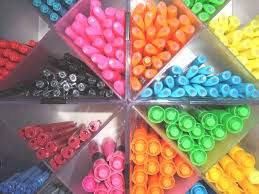
The order of the color scheme could be whatever, from low to high: blue, green, orange, yellow, pink. Each color would represent how well a student completed each objective.

For example, here's how I could use it in my 8th grade health class; these objectives are currently being tweaked for a project relating to melanoma/sun exposure (which I plan to post about this week). The objectives could be:
  • Identify at least seven facts about sun exposure, tanning, and/or melanoma
  • Describe at least three ways a student can protect themselves from the sun
  • Create an action plan utilizing the three ways described above
Or, whatever the objectives are for the project. I'd print them as written on a piece of paper (leaving space for teacher comments!), and it's incredible how much paper you save. As I'm grading the project, I'll mark each objective with the appropriate color highlighter. When the students get their grades back, they'll know how they performed for each objective/part of the rubric. The students can look at the rubric and color keys around the room, and I'll have the color code on the Smartboard as I hand back their grades, too. The rubric takes up far less paper space (I'm working to get four on one page), and it's visual. Initially, the students might be confused, but by being consistent with coloring, they can eventually catch on; e.g. yellow always being the highest score possible. Then, they can see what they did or didn't do well.

This requires multiple highlighters. I bought a box of highlighters (24 total; 12 yellow, 6 pink, and 2 each of blue, green, and orange) at Costco for less than ten dollars, even though I don't need 24! I could have the students do a peer-evaluation or self-assessment using the same method, too. Of course, a self-reflection after the assignment on what they can improve in is always a good idea!

I'll post back once I've used this a few times between now and the end of the school year, explaining how things went. As always, please feel free to e-mail me with any questions, comments, or concerns.
Related Posts Plugin for WordPress, Blogger...